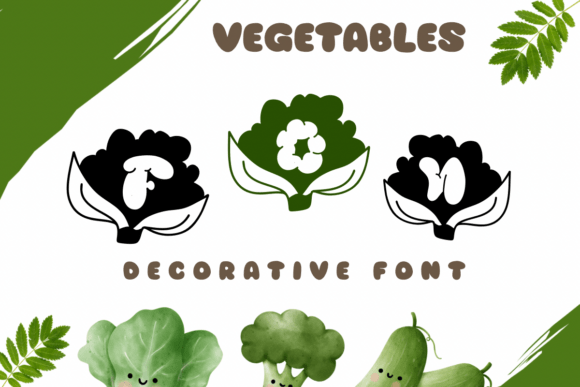
Fon Vegetables Font
There’s something about the way Fon Vegetables curves and curls that makes me want to write everything in it. It’s a decorative font with a playful, handcrafted vibe that feels like it was drawn with a pencil on a notebook page. I’ve been using it for everything from candle labels to wedding invitations, and it never fails to add that extra touch of personality.
When I first tried Fon Vegetables, I was designing a set of seasonal greeting cards. The font had a soft, whimsical feel that worked perfectly with the watercolor illustrations I was pairing it with. It wasn’t too bold or too delicate—just right for a handmade look that still felt professional.
Using Fon Vegetables in Handmade Products
I’ve used Fon Vegetables on labels for soy candles, and it adds a nice contrast against the clean lines of the packaging. It works well for short phrases like “Lavender & Vanilla” or “Citrus Grove,” giving each label a unique, artisanal feel. The font has a natural flow that makes it ideal for product names, brand tags, and even small text on stickers.
For printable wall art, Fon Vegetables brings a warm, inviting tone. I’ve designed a set of farmhouse-style signs with this font, and it pairs beautifully with rustic textures and muted color palettes. Whether it’s a “Welcome Home” sign or a “Bake Sale” banner, the font adds character without overwhelming the design.
When I create digital printables, I often pair Fon Vegetables with a clean sans serif font. This combination gives the design balance and clarity while keeping the visual interest high. It’s perfect for planner pages, quote cards, and holiday templates where the font needs to stand out but still be readable.
Designing with Fon Vegetables
One of the things I love most about Fon Vegetables is how versatile it is. It can be used for display purposes, such as headlines or titles, but it also works for longer text when needed. I’ve used it in a series of printable journal pages, and the font’s gentle swashes and alternates make it feel more personal and authentic.
When working with cutting machines like Cricut or Silhouette, I always test the font at different sizes. Fon Vegetables holds up well at smaller sizes, making it great for sticker sheets and small labels. I’ve also used it on tote bags and shirts, where it adds a custom, hand-painted look without needing to draw every letter by hand.
For shop branding, Fon Vegetables is a solid choice. It gives a cohesive, creative feel to product listings, social media graphics, and packaging. I’ve used it on my Etsy shop headers and product descriptions, and it helps reinforce the handmade, thoughtful nature of my work.
Best Practices for Using Fon Vegetables
If you’re planning to use Fon Vegetables for commercial purposes, make sure to check the licensing details. Some fonts have restrictions on how they can be used, especially when it comes to selling physical products or digital downloads. I always double-check the terms before finalizing a design.
When pairing Fon Vegetables with other fonts, I tend to go for a simple serif or sans serif to keep the design balanced. A script font could work too, but it might compete too much with the decorative elements of Fon Vegetables. For a modern look, I sometimes pair it with a bold display font for emphasis.
Readability is key, especially when designing for small spaces like product labels or stickers. Fon Vegetables is legible at most sizes, but I avoid using it for long paragraphs. It shines best when used for short, impactful text that adds a personal touch to the design.
I’ve also found that Fon Vegetables works well in multilingual designs. The font includes a range of characters and ligatures, which makes it easier to use in different languages without sacrificing style or clarity.
Real-World Applications
Whether it’s a birthday invitation, a wedding welcome board, or a holiday tag, Fon Vegetables brings a sense of warmth and creativity to any project. I’ve used it on printable wall art for a client who wanted a cozy, personalized look, and it turned out beautifully. The font’s charm made the design feel more like a one-of-a-kind creation rather than a generic template.
On the flip side, I’ve also used it for more formal designs, like wedding stationery. The font’s elegance and softness made it a good fit for a vintage-inspired theme. It added just the right amount of flair without being too flashy.
For seasonal projects, Fon Vegetables is a go-to. I’ve used it on Christmas tags, Easter cards, and summer-themed signs. Its versatility allows it to adapt to different themes and styles, making it a valuable addition to any designer’s toolkit.
Overall, Fon Vegetables is a font that feels like it was made for makers. It adds personality, style, and a handmade touch to any project. Whether you’re creating printable art, designing labels, or building your shop’s brand identity, this font is worth considering for its charm and flexibility.